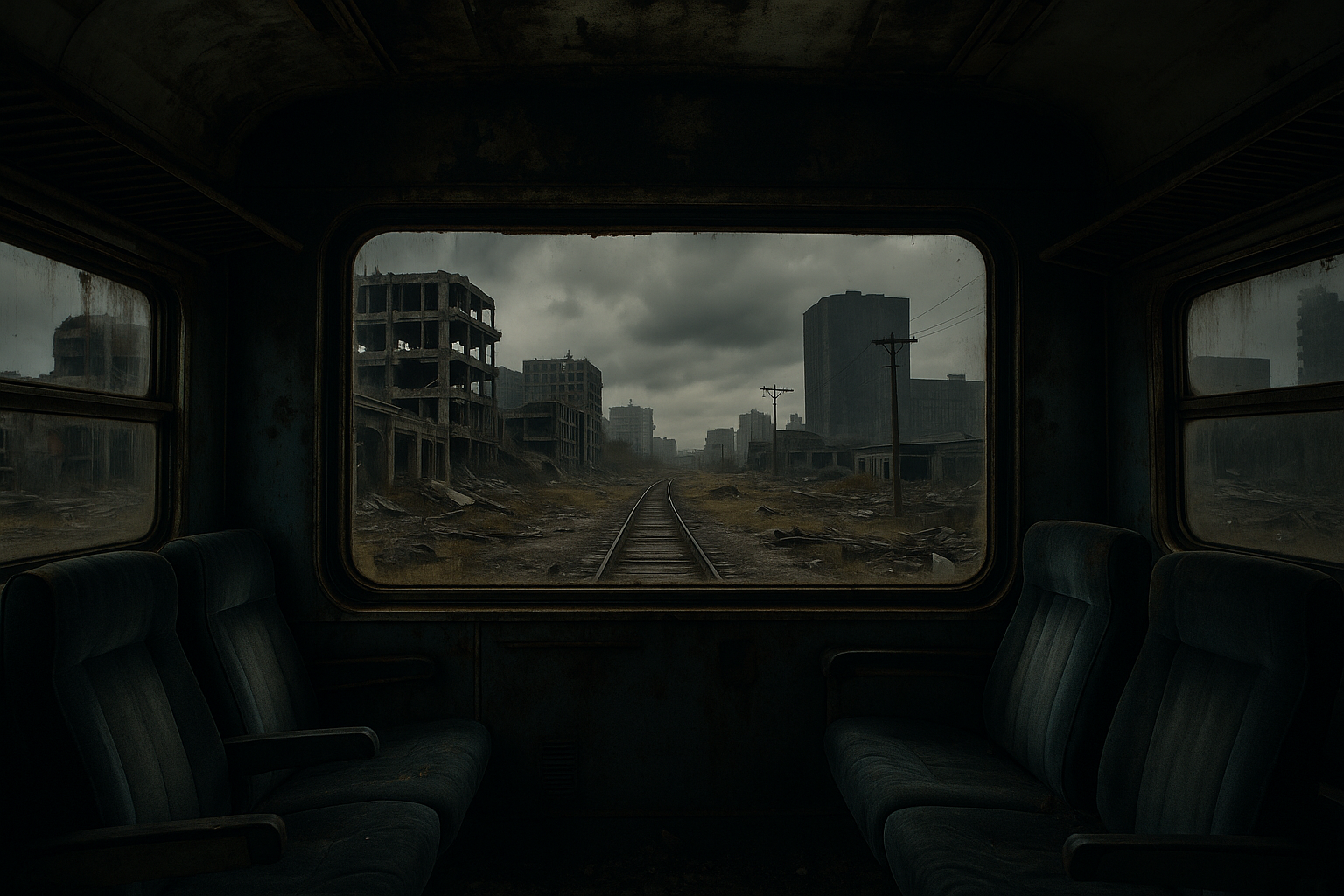
This is Savannah in Three Vignettes
"Savannah is a beautiful woman with a dirty face."
—Lady Nancy Astor.
Vignette One
It’s been almost a month since I made it to Savannah.
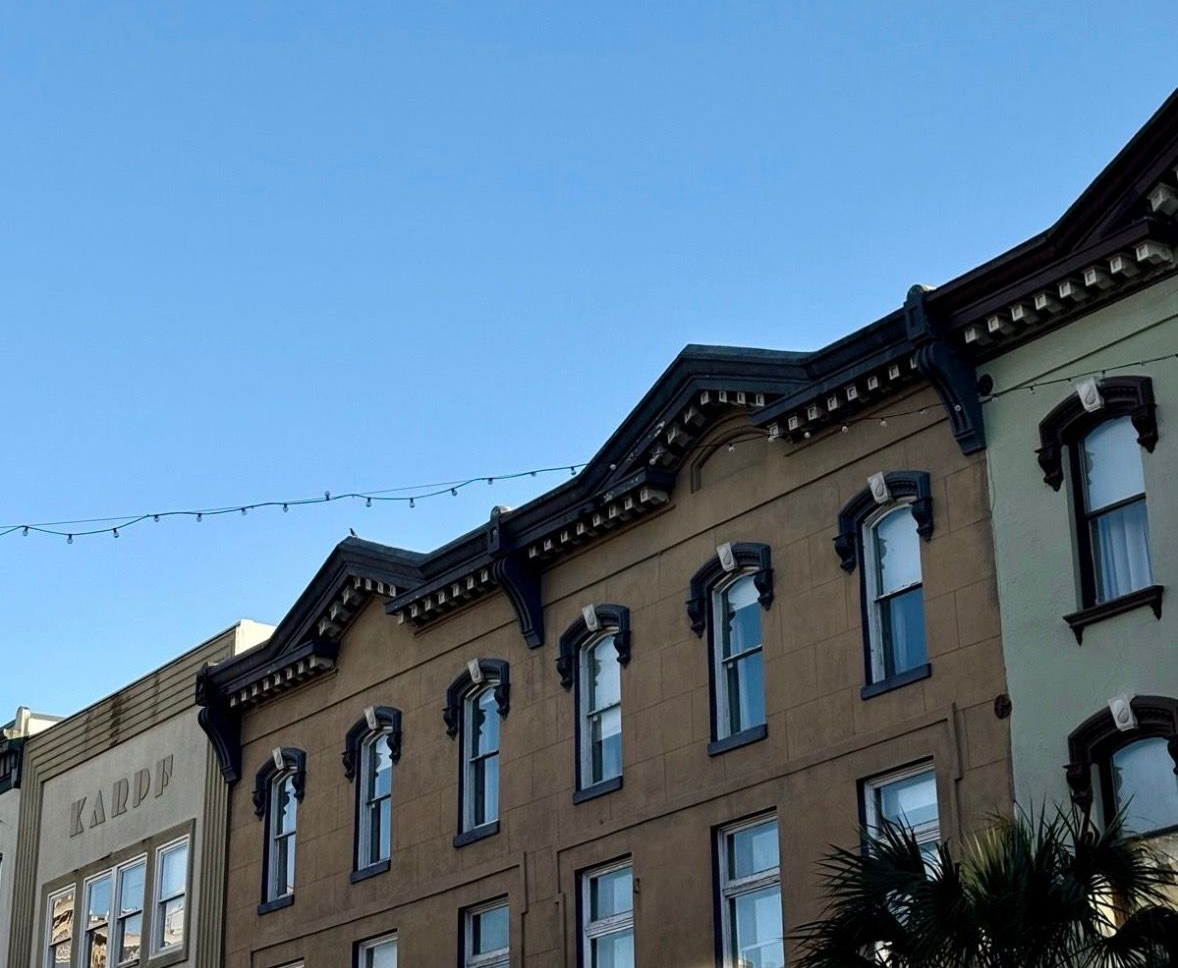
There’s something familiar about this place that I can’t seem to put my finger on. Perhaps it’s the Victorian cottages, or the many public squares. But in reality, it’s probably something much more simple than that: like the way the sidewalks are made of seashells, or how the streets are lined with Spanish moss.
It was never my intention to spend the entire month of February here. In fact, I came with plans to drive the length of the Floridian coast. But I suppose that’s the thing about the South: its landscapes, clear waters, and endless skies have a way of making me reconsider things. And so I linger, turning memories over in my mind, following one thought into another—surrendering, as I so often do, to my perpetual aimlessness.
The first thing I did when I got into town was go to the visitor center to grab a few maps. I was hoping to find one of Savannah, as well as one of Tybee Island, a small coastal village about a half-hour from downtown. I ended up with both, plus a map of the entire state of Georgia and another showcasing the broader region.
The city is designed on a grid: each ward centers around a square, and each square is surrounded by trust and tithing lots. Architecturally, Savannah is very much influenced by Antebellum wealth—most neighborhoods consist of several residential estates and grandiose civic landmarks.
For the first couple of days, I kept the maps of both Savannah and Tybee Island in my back pocket, mostly to check sites and mark what quickly became less a map than a topographic inventory. But by the end of my first week, such a seemingly innocuous task had jumpstarted what would become a month-long pursuit of something much more consuming: I wanted, needed, to know every crevice and corner of Savannah, and to understand how each related to the South beyond it. And what better way to begin than with what connects those corners in the first place? Of course, I am referring to transit systems.
Vignette Two
“Hey there. Saw you lookin’ at them pedicabs. You interested?”
“Sorry?” I replied, looking up from my phone. I’d been sitting by the window of a coffee shop, more or less staring off into space, when a man—who I’d later learn was named Tim—approached me.
“Them pedicabs across the street,” he said, gesturing toward the curb. “Saw you lookin’ at them. You interested? $20 for a ride. Great way for a pretty lady like you to see the city.”
I glanced back through the window. There were two of them parked across the street, their canopies bright against the old brick and wrought iron. I wasn’t particularly interested in a ride. At least, I hadn’t been five minutes ago. But there was something about the proposition that caught me off guard. Maybe it was the way he said it, as though the city were his and he was offering to lend it to me for an afternoon.
I took a couple sips of my coffee, hoping to buy myself some time. “Well uh…” I said, clearing my throat. “Yeah. I mean, sure. I wouldn’t mind a ride. You said it’s $20?”
“That’s right,” he replied with a grin, two of his front teeth missing.
I scratched my leg and looked down, only then noticing that Tim was wearing two different sneakers. I looked back up, unsure what to make of him. “I’m assuming that, uh…” My attention drifted back to his shoes. I shook my head, as if trying to snap myself out of whatever strange daze I’d fallen into. “Sorry,” I said. “I’m assuming you drive?”
He laughed briefly, then stared at me with an intensity that made the moment feel longer than it was. I glanced around the coffee shop, unsure what to do with myself, then looked back at him. He was still staring, but at this point, his eyes were glossed over, almost like someone had switched him off. Eventually, Tim found his way back, and a big smile spread across his face.
“No,” he snickered. “I don’t drive it. I ride it.”
Vignette Three
It was a mild February morning—55 degrees Fahrenheit—and I was making my way up toward Gwinnett Street to catch the 9:15 bus. I’d already seen Savannah by trolley and pedicab, but the CAT system was a different way of experiencing it. So I paid the fare and made my way towards the back.
There were only a few other people on the bus—an unfortunate reality that seemed all too common across much of America nowadays, outside of major urban hubs. Perhaps the saddest thing about the decline of public transit is what we stand to lose along with it: a sense of community, and a feeling of connection to the places we inhabit.
The $1.50 fare carried me from Gwinnett Street toward the Starland District, beyond the squares and historic facades. Motor scooters and bicyclists wove and whizzed past, and I caught sight of two women crossing Bull street. Both were dressed in cream linen, their hair blowing gently across their sunglass-covered eyes.
“We’re in that New York state of mind,” I heard the person sitting in front of me say to the little girl beside them.
“Except this isn’t New York,” she replied dryly. “This is Savannah.”
I got off near the old Starland Dairy, intent on spending the rest of the day exploring on foot. Throughout my travels, I had found that my favorite way to get to know a place was simply to indulge in a long walk. So I wandered, without much of an itinerary, eventually finding myself near the riverfront, where I spent the rest of the afternoon people-watching and letting my thoughts drift. The thing about Savannah was that, despite its leisurely pace and outward air of permanence, it somehow seemed to invite self-reflection. And what better place to lose myself in it than along the promenade? What follows, then, are snippets of the many impressions and intimations that came to me during that February, spent in a place so distinct from the rest of the region to which it belonged. Perhaps this is where I ought to begin, and where, in some sense, I must also leave off:
February 8: People on Sunday. They wear lighter colors and loose cotton, and seem to float as they walk. There is a man playing the saxophone, a woman bending to smell a rosebush, and then there is the sky, carrying the weight of the sun, its heaviness felt everywhere.
I feel as though I am on the verge of some acute realization, one that could only come to me in Savannah. The thought first took shape after I read a quote by Henry James on the side of a bookshop: “I recall my fleeting instants in Savannah, as the taste of a cup charged to the brim.” I keep retracing the path that brought me here, to this place where I have grown self-indulgent, drinking three cups of coffee a day, and where I find myself asking what it is about solitude that allows me to know myself so intimately, to understand the contours of my own selfhood with such apparent clarity. I wonder, too, whether I am one of the few people who have experienced an entire year of such isolation, long enough to arrive at some seemingly definitive understanding of who I am, only to discover, when I eventually return to the social world, that much of what I came to know was an illusion.
February 19: Could a city really be understood? Or was Savannah the kind of place that revealed itself only quietly, in unsuspecting ways? I had arrived wanting to know every crevice and corner of it, to piece together its streets and squares until the whole might become legible. But the longer I stayed, the more elusive it all seemed. Perhaps this was what made the city so difficult to grasp: it seemed to exist on its own terms, suspended somewhere between preservation and change, its past never entirely past and its present never quite settled. And now I wonder if I am speaking about the city at all, or if, along the way, I have begun to speak about myself.
February 25: The maps I had picked up during my first week were still tucked away in my back pocket. I had carried them everywhere, hoping to understand where everything lay in relation to everything else, how one neighborhood gave way to another, and how the city fit into the larger geography of the South. But perhaps I had mistaken the nature of the task. After nearly a month in Savannah, I had begun to feel that the city stood apart from the region surrounding it, not simply in its architecture or history, but in its peculiar way of resisting easy definition. For all my attempts to chart it—to mark its boundaries and make sense of its arrangement—Savannah seemed to fold endlessly back in on itself. Every street led me somewhere unexpected; every familiar corner seemed to harbor something I had overlooked. And every so often, in the midst of all that discovery, I would stumble upon something that looked uncomfortably like my own reflection.
I just walked all the way from the riverfront to Forsyth Park. As I made my way down the adjoining streets to the bench where I’m now sitting, a woman approached me.
“Hey,” she said. “Do you happen to know where the Cathedral is?”
I glanced down the street, orienting myself.
“Yeah,” I said. “It’s not too far from here, probably a five-minute walk. I can take you over there if you’d like.”
She nodded, and we started walking, my hands in my pockets, and my thoughts on the old Victorian facades lining the street.